
(excerpts from NOAA Fisheries)
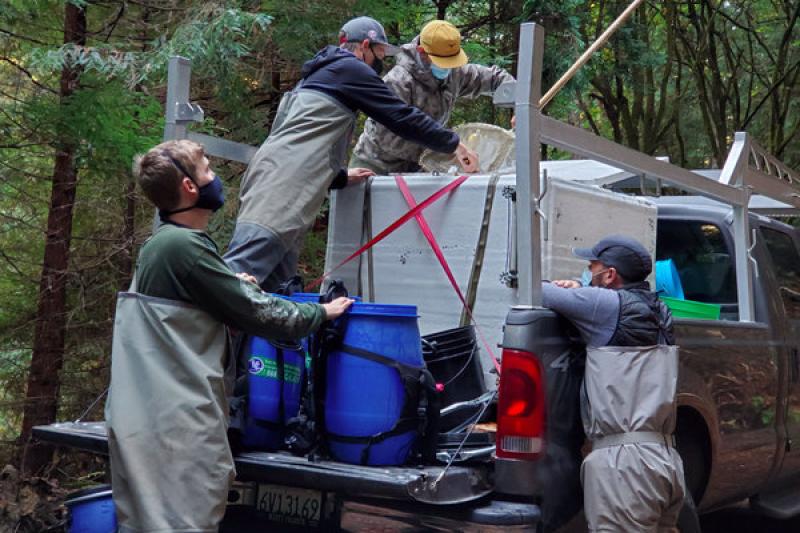
After years of habitat restoration, in collaboration with local landowners, 10,000 juvenile coho salmon were released into Pescadero Creek in northern California in November 2020…
“Bringing coho back to the Pescadero watershed is a priority for our agency, and was possible, because extraordinary work has been done to restore their habitat,” said Joel Casagrande, Fisheries Biologist for NOAA Fisheries’ West Coast Region. “Also, now there is a critical mass of support from partners and landowners in the watershed who are helping in the effort.”
… the coho are less than a year old and approximately two inches long. They will grow another three inches in the creek before they migrate out to the ocean. After maturing in the ocean and growing longer than two feet, the surviving adults will return to freshwater streams to spawn. Coho return to streams where they spent time as juveniles, typically completing the cycle after three years.
“Despite challenges and setbacks, including a wildfire in the area that nearly burned down the hatchery itself, we were able to save the salmon. That makes today’s release of the coho even more of a success,” said Casagrande…
“Between these hatchery-raised fish and any small existing wild population, I’m hopeful we’ll see robust fish runs returning in the years to come,” said Kellyx Nelson, Executive Director of the San Mateo Resource Conservation District.
…CCC [California Central Coast] coho salmon are accustomed to swimming against the current, although they have been dealt a hard hand over the last few decades. They were once abundant in coastal streams from Punta Gorda, California, to the Santa Cruz area. The species has suffered from habitat degradation throughout its native coastal watersheds. Wildfires, floods, drought, and extreme storms have also contributed to their decline.
Studies estimate that out of the 10,000 juvenile salmon released, just 2 percent, or only 200, are likely to survive and return as adults to spawn. Still, that is an important step toward recovering a robust coho salmon population in their native waters…”