
by Adria Arko
 With the rains that we have had this winter and the rains we hope are yet to come, our thoughts turn to fallen trees. Often we view trees in the creek as an obstruction and a potential hazard. On the other hand branches, logs, trees, root wads, boulders and rocks provide essential food and shelter for fish and wildlife.
When trees fall into a creek they alter the streamflow to create pools where young fish live and hide and sort gravel where adults can rest and lay their eggs. Trees and branches also form cover to protect fish from predators. By keeping and increasing natural debris in waterways to increase habitat, we can help young fish survive. Other wildlife, such as the California red-legged frog and western pond turtle, benefit as well. The pools attract aquatic insects, which are food for many species.
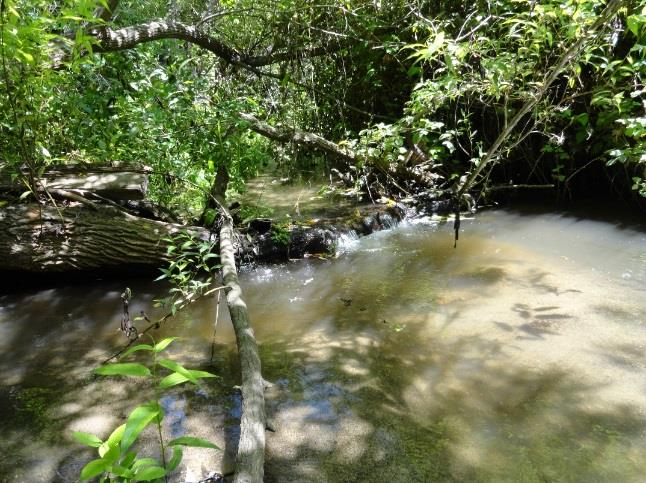 In addition to benefiting wildlife, natural debris in creeks helps maintain natural stream function by slowing the flow of water, which stabilizes the stream channels and banks, and promotes groundwater recharge for drought relief in other times of the year. Contrary to what we are often told, natural debris in the creek can actually reduce flooding by catching wood that would otherwise flow downstream all at once creating larger logjams, and by holding back sediment that would accumulate downstream. While the majority of time natural debris provides essential benefits to creeks it also has the potential to threaten life and property. In these cases, natural debris may need to be repositioned, partially removed, or removed. It is often possible and sufficient to reposition the material without removing it from the creek or trim branches above the water while leaving the main stem or root wad intact and in place.
Because removing natural debris can alter or even harm the creek and the fish and wildlife that depend upon it, it is important to observe a situation before taking action. Also, removing natural debris can require permission from the California Department of Fish and Wildlife and others.
As much as possible, natural debris should be left in place. However, if you are concerned about your property, you can call the RCD at 650-712-7765 x106 for a confidential non-regulatory conversation about your options or call the CA Dept. of Fish and Wildlife at (510) 853-1054 for guidance.
If you are interested in doing more to enhance streams, help wildlife, and reduce flooding and erosion, strive to conserve water, protect riparian habitats, and keep streams clean of sediment, wastewater, garbage and runoff. Contact the RCD for more information about what you can do to help.